Why Automation for Industry is Essential for Modern Business Success?
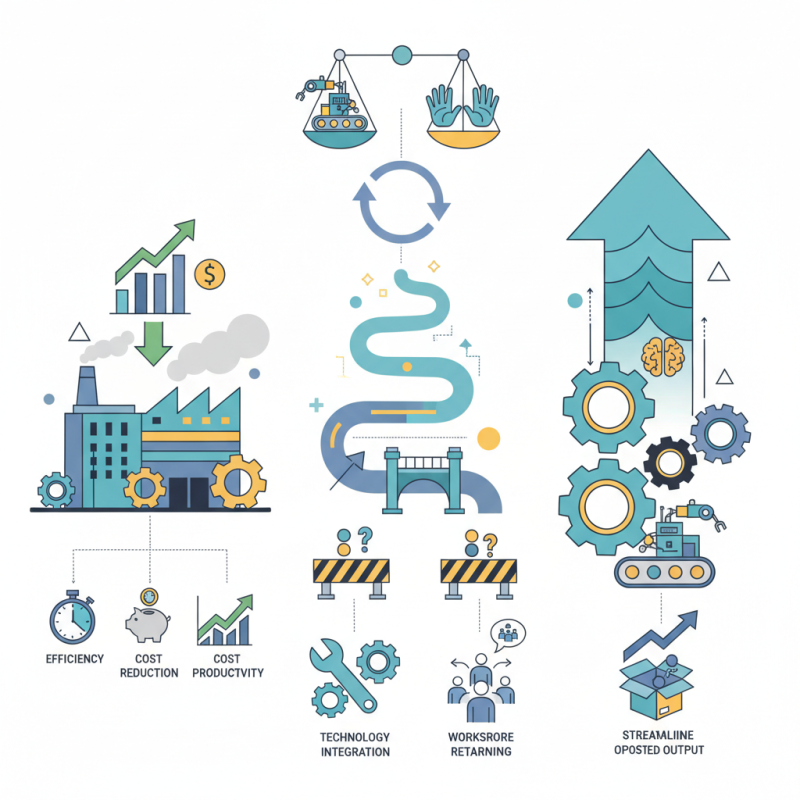
In today's fast-paced business environment, automation for industry has become more than a trend; it is a necessity. Companies that adopt automation can enhance efficiency, reduce costs, and improve productivity. The connection between automation and business success is clear. Manufacturers and service providers are increasingly relying on automated systems to stay competitive.
Yet, the journey of implementing automation for industry is not without challenges. Many organizations encounter hurdles during the adoption process. Issues like workforce retraining and technology integration often arise. These obstacles require careful consideration. Businesses must assess their specific needs before diving into automation.
Despite these challenges, the benefits are undeniable. Industries that invest in automation can streamline operations and boost output. However, there is a risk of over-reliance on technology. Continuous evaluation and adaptation remain crucial. Balancing automation with human skills is essential for long-term success.
The Role of Automation in Enhancing Efficiency in Modern Industry
Automation plays a crucial role in enhancing efficiency within modern industry. It simplifies complex tasks, allowing businesses to focus on growth. By using automated systems, companies can speed up production. This not only saves time but also reduces errors. When machines handle repetitive tasks, human workers can concentrate on more strategic initiatives.
However, the integration of automation is not without challenges. Some employees may feel threatened by technology. There can be resistance to change, slowing down the adoption process. It's essential to train staff properly and encourage them to embrace new tools. Additionally, businesses must keep evaluating their automated processes. Not every automated solution fits every situation. Ongoing assessments can lead to refining operations and minimizing downtime.
Incorporating automation into industry requires careful planning. Companies must ensure that their systems align well with their goals. Monitoring the workflows often reveals areas for improvement. By fine-tuning automation, businesses can achieve higher efficiency and maintain a competitive edge.
Impact of Automation on Industry Efficiency
This chart illustrates the significant impact that automation has on production efficiency within various industries. As businesses embrace automation, efficiency levels have increased from 60% to 90%, highlighting its essential role in modern industrial success.
Key Technologies Driving Automation in Today's Business Environment
Automation in industry has become a game changer for businesses. Various technologies are driving this transformation. Robotics is one of the key players. Robots can handle repetitive tasks efficiently and accurately. They reduce human error and increase production speed. This is crucial in today's fast-paced market.
Another significant technology is artificial intelligence (AI). AI systems can analyze vast amounts of data quickly. They help companies make informed decisions based on real-time analytics. This leads to better resource management and improved customer service. However, implementing AI requires careful planning and skilled personnel.
The Internet of Things (IoT) also plays a vital role. It connects various devices, enabling seamless communication and data sharing. This connectivity can optimize operations, but it also presents cybersecurity challenges. Companies must secure their networks to prevent breaches. Balancing innovation and security is essential for sustainable growth.
Benefits of Automation: Cost Reduction and Increased Productivity
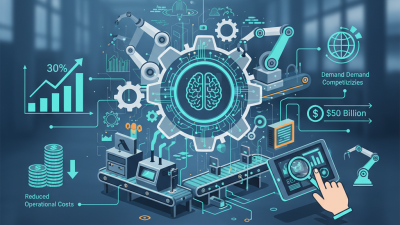
Automation in industry is rapidly transforming how businesses operate. According to a report by McKinsey, companies that adopt automation can reduce operational costs by up to 30%. This significant cost reduction appeals to businesses aiming to remain competitive in a fast-paced market. Lower costs mean more available resources for innovation and growth.
Increased productivity is another crucial benefit of automation. A study by the World Economic Forum indicates that automation can boost productivity by 20-30% in various sectors. By implementing automated processes, companies streamline workflows and minimize human error. Tasks that once took hours can now be completed in minutes.
However, businesses should reflect on the potential skills gap. Automation may lead to job displacement in some areas, making it essential to invest in reskilling initiatives. Balancing technology with human expertise is a challenge many companies face today.
Moreover, tracking and analyzing data becomes easier with automation tools. Enhanced data analytics can drive better decision-making, leading to improved performance. Yet, companies must ensure data security and privacy. As they transition to automation, there are complex considerations to address in terms of technology integration and employee training. These aspects require thoughtful strategies to navigate successfully.
Challenges Businesses Face in Implementing Automation Solutions
Implementing automation in industry is not without its challenges. Many businesses face significant hurdles. According to a recent report, about 70% of organizations reported difficulty in integrating automation systems with existing workflows. Compatibility issues can create disruption. Employees may resist changes, fearing job losses or increased complexity in their roles.
Another major concern is the cost of implementation. A study revealed that 58% of companies reported budget constraints as a primary barrier. Automation solutions often require substantial initial investments. These costs can include technology upgrades, training, and maintenance. Despite these obstacles, companies that manage to implement successful systems could see a potential return on investment. This ROI can range from 20% to 30% in improved efficiency over a few years.
Moreover, a lack of skilled labor poses a serious challenge. Many workers may not have the necessary expertise to operate advanced automated systems. In fact, 65% of businesses identified skills gap issues as a top concern. Training existing staff may be time-consuming and costly. Businesses must carefully strategize to overcome these challenges while leveraging the benefits that automation promises.
Future Trends in Industrial Automation and Their Impact on Business
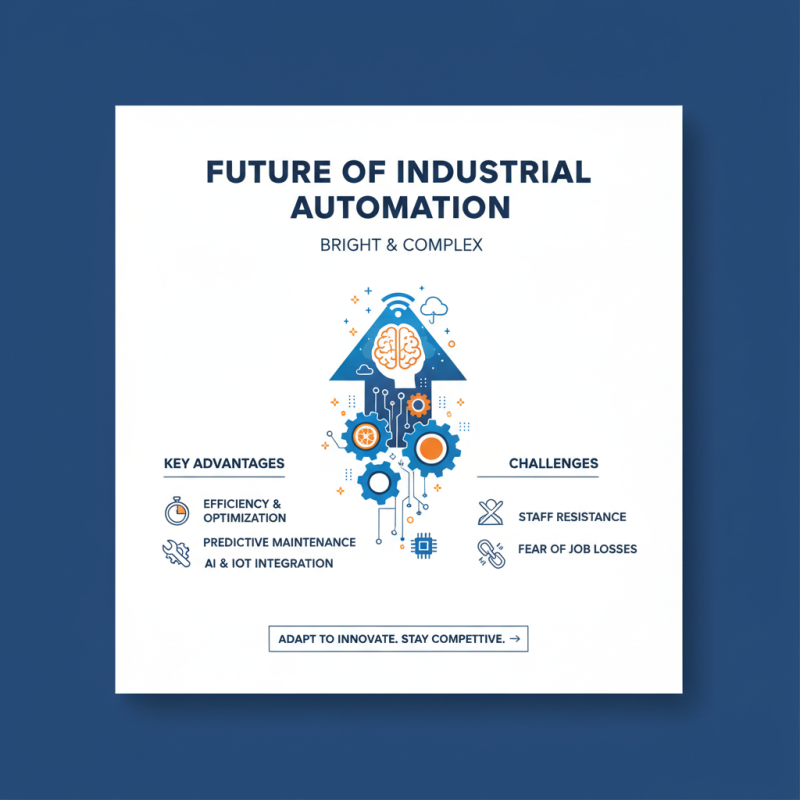
The future of industrial automation is bright but complex. As technology evolves, businesses must adapt to remain competitive. Automation is no longer just about efficiency; it involves integrating AI and IoT into operations. These technologies can predict maintenance needs, optimizing downtime. However, this presents challenges. Companies may find staff resistance to technology and fear of job losses.
The trend is toward smart factories. Real-time data streamlines processes but requires skilled workers to interpret it. Automation can enhance productivity, yet workers must adapt. Training becomes vital as roles shift. Businesses face the dilemma of investing in new tech while maintaining workforce morale.
Moreover, cybersecurity emerges as a concern. Increased connectivity leaves systems vulnerable. Companies must not only focus on automation but also build robust security measures. The path to success in automation is not straightforward. Businesses should continually assess the impact of these changes and remain flexible to evolve with them.