Top Automation Solutions for Businesses in 2026?
In 2026, the landscape of business is set to change significantly. Automation solutions will play a crucial role in this transformation. These technologies promise efficiency and productivity. However, their implementation is not without challenges. Companies will need to adapt swiftly.
Automation solutions can streamline operations, reduce errors, and save time. Yet, many businesses may struggle with the transition. Employees might feel threatened by these advancements, creating a need for retraining and support. The balance between human and machine must be carefully navigated.
Investing in automation solutions is an opportunity, but it requires thoughtful planning. Businesses must evaluate their unique circumstances. What works for one might not work for another. The journey towards automation could reveal hidden inefficiencies and prompt critical changes. Embracing this evolution will shape the future of work.
Emerging Trends in Business Automation for 2026
As businesses prepare for 2026, automation continues to evolve. Emerging trends indicate a significant shift towards AI-driven processes. According to a recent report, over 70% of companies plan to implement AI tools in their operations by 2026. This increased reliance on AI can enhance efficiency but also raises questions about data security and ethical considerations.
Automation in customer service is on the rise. Chatbots and virtual assistants are expected to manage 85% of customer interactions. This shift could improve response times but might frustrate customers who prefer human contact. Human touch is still vital in complex scenarios. Balancing automation with personal interaction will be crucial.
Tip: Regularly assess your automation tools. Are they meeting customer needs? Analyze performance metrics to ensure quality service.
Another trend is the integration of automation in supply chain management. Reports show that logistics companies adopting automated systems see a 20% reduction in operational costs. However, reliance on technology brings risks. System failures can disrupt the entire process.
Tip: Have backup plans in place. This can minimize disruption risk if automated systems fail.
In 2026, businesses will navigate a fine line between embracing innovation and addressing potential drawbacks. Continuous evaluation will be key to successful automation strategies.
Key Technologies Driving Automation Solutions
As we look ahead to 2026, automation solutions will play a pivotal role in the business landscape. Key technologies are driving this evolution. According to a recent report by McKinsey, around 70% of businesses will adopt automation technologies by 2025. This shift is propelled by advancements in artificial intelligence, robotics, and cloud computing. Each technology contributes uniquely to enhancing operational efficiency.
Artificial intelligence enables deeper data analysis and decision-making. AI algorithms can process vast data sets in real time. This capability allows businesses to adapt swiftly to market changes. Robotics, on the other hand, excels in repetitive tasks. These machines reduce human error and increase output. However, there are challenges. Not all companies can invest in high-end robotics. This creates disparity in automation adoption.
Cloud computing offers flexibility and scalability. Businesses can access powerful tools without heavy upfront investment. However, reliance on the cloud also raises security concerns. A report by Gartner shows that 60% of companies struggle with data security in the cloud. Addressing these issues is crucial for successful automation. Balancing benefits and risks will define the automation journey in the coming years.
Impact of AI and Machine Learning on Business Processes
In 2026, automation will transform business processes significantly. AI and machine learning will play pivotal roles. They will improve efficiency and accuracy, but challenges remain. Companies must adapt to these changes. Training staff is crucial. Automation can reduce human error but may also lead to job displacement worries.
Consider these tips. First, evaluate your current processes. Identify areas that lack efficiency. AI can help streamline repetitive tasks. Secondly, involve your team in the transition. They can provide valuable insights. Their acceptance is key to a smooth integration. Remember, technology can enhance productivity, but it should not replace human creativity.
It's important to reflect on the ethical implications. As automation grows, so do concerns over privacy and data security. Businesses need robust security measures. Balancing innovation with responsibility is vital. Employees may need reassurance about job stability too. Open discussions can alleviate fears and foster a supportive environment.
Case Studies: Successful Automation Implementations
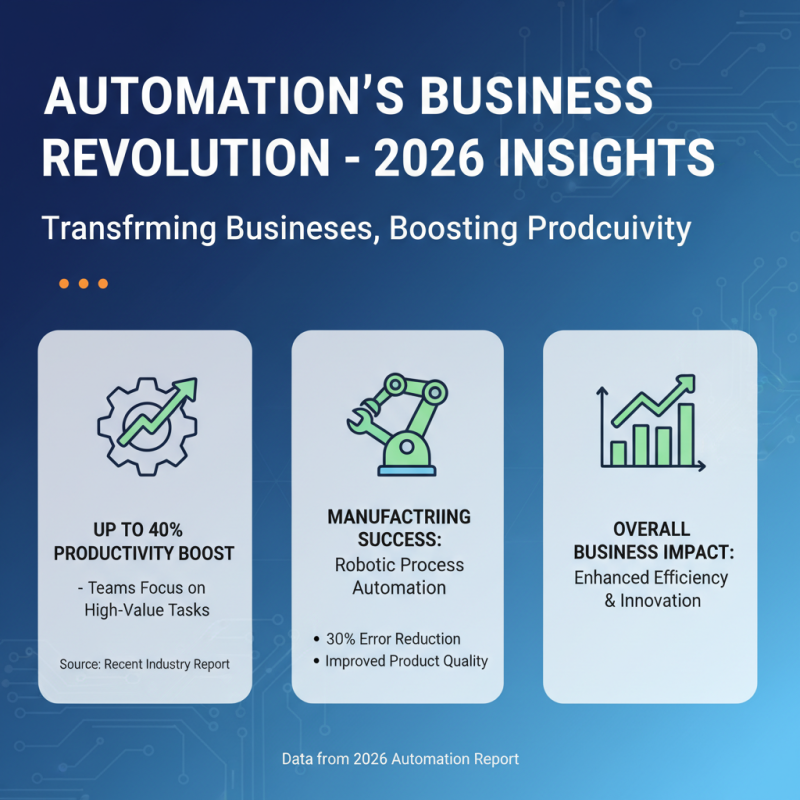
In 2026, successful automation implementations have transformed many businesses. A recent report highlights that automation can boost productivity by up to 40%. This significant increase allows teams to focus on higher-value tasks. For instance, a manufacturing company integrated robotic process automation. They achieved a 30% reduction in errors, drastically improving product quality.
However, these implementations sometimes face challenges. Employees may resist change, fearing job displacement. A survey found that 65% of workers express concerns about automation affecting their roles. Addressing these fears is crucial. Training and upskilling can help mitigate resistance. One retail chain provided workshops that led to a 75% acceptance rate among staff.
Moreover, not every automation strategy succeeds. One logistics firm struggled with its AI deployment. Despite initial optimism, system integration proved difficult. The project resulted in unexpected delays and costs. These experiences highlight the need for careful planning. Reflecting on these lessons can guide future efforts. As businesses continue to embrace automation, learning from both successes and failures remains essential.
Future Challenges and Considerations in Business Automation
As businesses look towards 2026, automation will pose new challenges. The rise of artificial intelligence could lead to job displacement. Workers may need retraining to adapt to new roles. Companies must consider the human element when implementing automated systems. How to balance efficiency and job security will be crucial.
Data privacy remains a pressing concern. As automation collects vast amounts of information, protecting it is vital. Businesses must ensure compliance with evolving regulations. Failure to do so could result in fines and loss of trust! Regular audits and updates to security protocols may be necessary.
Finally, not all automation efforts will succeed. Companies might invest heavily in technologies that fail to deliver. Assessing the return on investment is crucial before implementation. Establishing clear goals can guide the automation process. This reflection will help businesses to evaluate their strategies effectively.