Top Innovations Transforming the Automation Industry Today?
The automation industry is undergoing a remarkable transformation. Innovations are reshaping how businesses operate, improve efficiency, and boost productivity. From artificial intelligence to advanced robotics, these technologies are at the forefront.
Smart systems are changing manufacturing processes. Companies are integrating new tools into their workflows. Efficiency gains can be seen in various sectors. However, challenges arise with implementation. Employees may resist change, leading to potential setbacks. Balancing technology with human skills is crucial.
As we explore the top innovations transforming the automation industry, we must consider their implications. Are these advancements truly beneficial? Will they enhance work experiences? Reflecting on these questions helps us understand the path ahead. Each innovation holds promise but also requires thoughtful integration into existing frameworks.
Emerging Technologies Revolutionizing Automation Processes
Emerging technologies are redefining automation processes across various industries. Robotics and artificial intelligence now play pivotal roles. They enhance efficiency and accuracy in tasks once performed by humans. Organizations increasingly rely on these innovations to stay competitive. It's fascinating to see how machine learning algorithms optimize workflows. They can predict outcomes and minimize errors in production lines.
Tip: Embrace change. Experiment with new technologies. It might feel daunting at first, but growth happens outside your comfort zone.
Another significant trend is the Internet of Things (IoT). Connected devices facilitate real-time data sharing. Sensor technologies enable machines to communicate and adapt on the fly. However, integrating these systems can pose challenges. Often, legacy systems resist change, leading to inconsistencies and confusion.
Tip: Conduct thorough training. Ensure your team understands new tools. Without proper guidance, even the best technologies can fall flat.
Blockchain is also entering the automation arena. It enhances security and transparency in transactions. Yet, its complexity may deter some organizations from adoption. Many may not grasp its potential benefits or applications fully.
Tip: Invest time in understanding innovative technologies. The more informed you are, the better decisions you can make. Emerging solutions need careful consideration.
Artificial Intelligence: Enhancing Decision-Making in Automation
Artificial intelligence (AI) is redefining the automation industry. It enhances decision-making by analyzing vast amounts of data quickly. By leveraging AI, systems can identify patterns and trends that humans might overlook. This leads to more precise and timely decisions, which are crucial in a fast-paced environment.
Tips: Establish clear objectives for your automation. Understand what problems you want to solve. Be open to adjusting your approach based on AI insights.
Though promising, AI isn't without challenges. Data quality is crucial. Poor data results in flawed AI conclusions. Moreover, over-reliance on AI could lead to complacency among teams. It is essential to maintain critical thinking alongside automated processes.
Tips: Train your team to interpret AI outputs. Encourage them to question recommendations. Develop a balanced approach between human intuition and machine intelligence.
Robotics Advancements: Increasing Efficiency and Precision
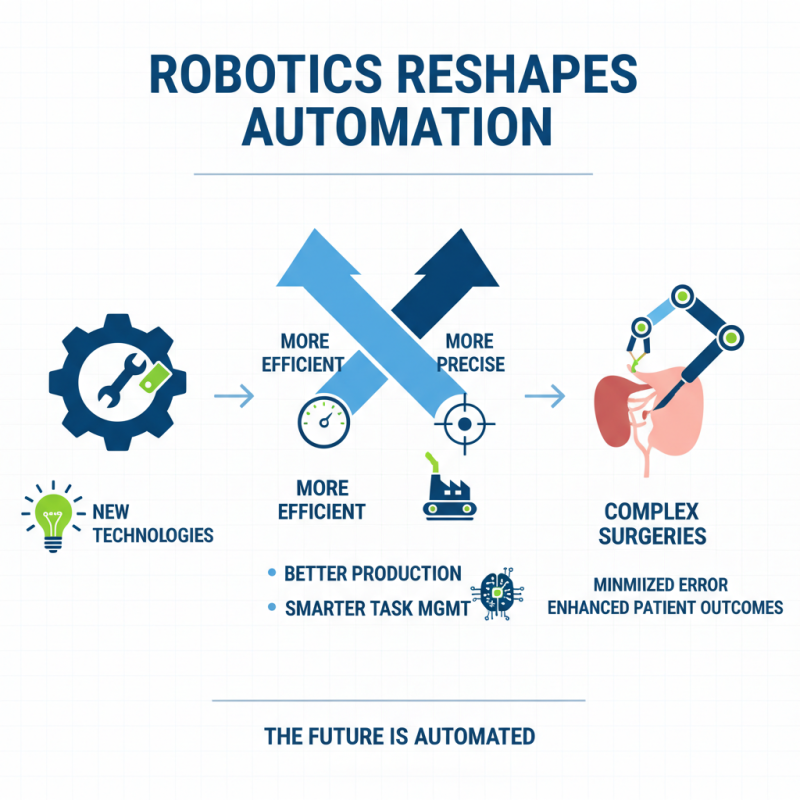
Robotics advancements are reshaping the automation industry significantly. With new technologies, robots are becoming more efficient and precise. This evolution leads to better production lines and smarter task management. For instance, robots can now perform complex surgeries with remarkable accuracy. This precision minimizes human error and enhances patient outcomes.
However, these advancements aren't without challenges. Many enterprises struggle to integrate new robotic systems seamlessly. Training staff can be time-consuming and costly. Sometimes, machines fail to function as expected, leading to delays. Despite these hurdles, the push for automation continues to grow. As robots take on more responsibilities, they often do so in unpredictable environments, which can complicate their effectiveness.
The future of robotics looks promising, yet it calls for deeper reflection. The balance between human oversight and machine autonomy remains delicate. While robots enhance productivity, reliance on them raises concerns. How do we ensure they complement human work rather than replace it? These are questions that need addressing as we move forward into a high-tech landscape.
Internet of Things (IoT) Impact on Smart Automation Solutions
The Internet of Things (IoT) is reshaping smart automation solutions in exciting ways. Devices now communicate seamlessly, leading to improved data collection and analysis.
Factories equipped with IoT sensors can monitor equipment health in real-time. This proactive approach reduces downtime and maintenance costs.
However, not all implementations are flawless. Companies may struggle with
data overload or find it challenging to integrate new systems. Security concerns also arise as more devices connect to networks.
Vulnerabilities in IoT can expose critical infrastructure to cyber-attacks. It's essential to address these risks while moving forward.
Despite these challenges, the benefits of IoT in automation are significant. Enhanced efficiency and optimized workflows can lead to
cost savings. Real-time insights empower managers to make informed decisions. As the technology evolves,
the importance of robust strategies to manage its complexities cannot be overstated. The journey involves continuous learning and adaptation.
Cloud Computing: Enabling Scalable Automation Platforms
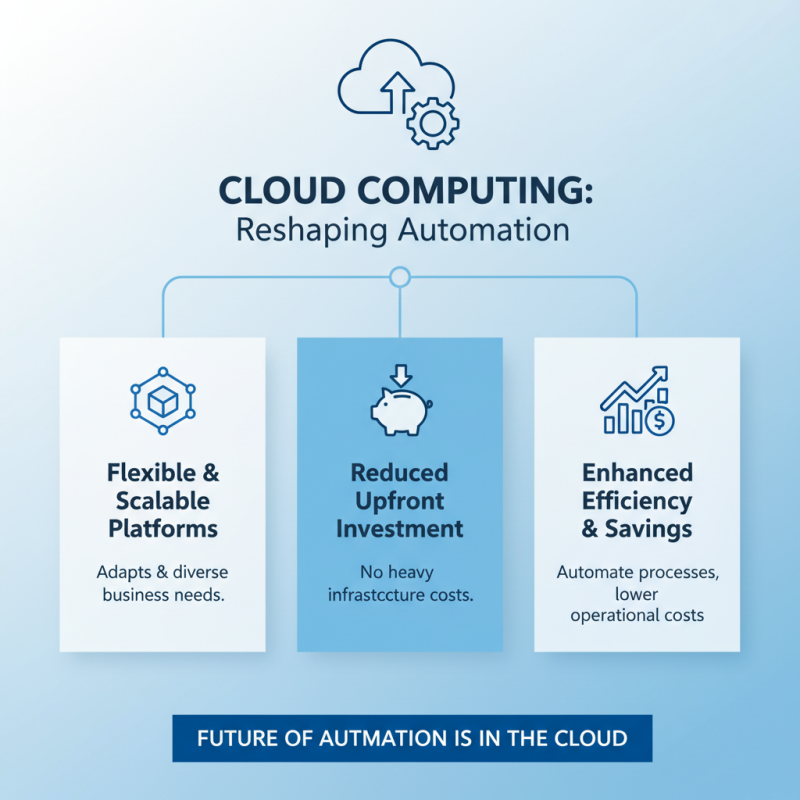
Cloud computing is reshaping the automation industry in profound ways. It provides flexible, scalable platforms that adapt to various business needs. The shift to cloud-based solutions allows companies to automate processes without heavy upfront investments. This accessibility leads to enhanced efficiency and reduced operational costs.
However, the transition to cloud computing is not without challenges. Organizations may encounter data security concerns. The risk of losing sensitive information can lead to hesitation among stakeholders. Additionally, the integration of existing systems with new cloud services can be complex. Each step requires careful planning and execution to mitigate potential issues.
Despite these hurdles, the benefits of cloud-based automation are undeniable. Many businesses experience faster deployment times and more reliable performance. This technological advancement empowers teams to focus on strategic goals rather than mundane tasks. Companies are learning to navigate these innovations, but room for improvement exists. Embracing this transformation is essential, but it requires ongoing reflection and adaptation.